

Health has come a long way at the climate negotiations. At COP28 in Dubai which held the first COP Health Day, I joined the discussion on climate change and neglected tropical diseases at the Reaching the Last Mile Forum, outside the Blue Zone, and heat stress was barely mentioned. Three years on, health opened COP31 on its first day, with heat among the leading concerns, and for the first time health sits formally on the COP Action Agenda.
Today I followed online the ministerial session on health in Antalya, on a first day dedicated to food, agriculture and health. Dr Tedros Adhanom Ghebreyesus, Director-General of the World Health Organization, set out three priorities, captured in WHO’s new briefing for COP31. National planners are asked to build resilient health infrastructure and early warning systems. Negotiators are asked to write health explicitly into the climate negotiations, so that finance for health interventions can be released. Governments are asked, quite simply, to implement, implement and implement, with the capacity and coordination this requires. The Belém Health Action Plan set the direction of travel. The Antalya Initiative for Health Resilience (AIR), launched today, will help guide how it is put into practice.
Two items in the WHO briefing stand out for us. The first asks countries to recognise climate-related health impacts in their national plans and reporting. The second asks for health-specific vulnerability and adaptation assessments, with measures for pregnant women, newborns, children, older people and other at-risk groups built into National Adaptation Plans. If reporting on these groups becomes an expectation, supported by finance, countries will need evidence that links climate science to particular places and the people who live there. That question of what to measure, and for whom, also ran through today’s discussion in the UNFCCC Pavilion of the IPCC’s work on adaptation methodologies, metrics and indicators, where local implementation and livelihoods were both part of the conversation.
This is the kind of deliberative and quantitative evidence we have been building with partners. In Malawi, our CHAIRR project with Sightsavers produced district-level climate risk and vulnerability assessments for ten districts. The project looked at how a changing climate could affect neglected tropical diseases, and then brought national and district stakeholders together to develop adaptation action plans. The same place-based, interdisciplinary approach matters for small island states, which WHO names among the places where climate impacts fall hardest, and where we are building links with partners in Vanuatu and across the Caribbean, including through our recent work with the Caribbean Actuarial Association.
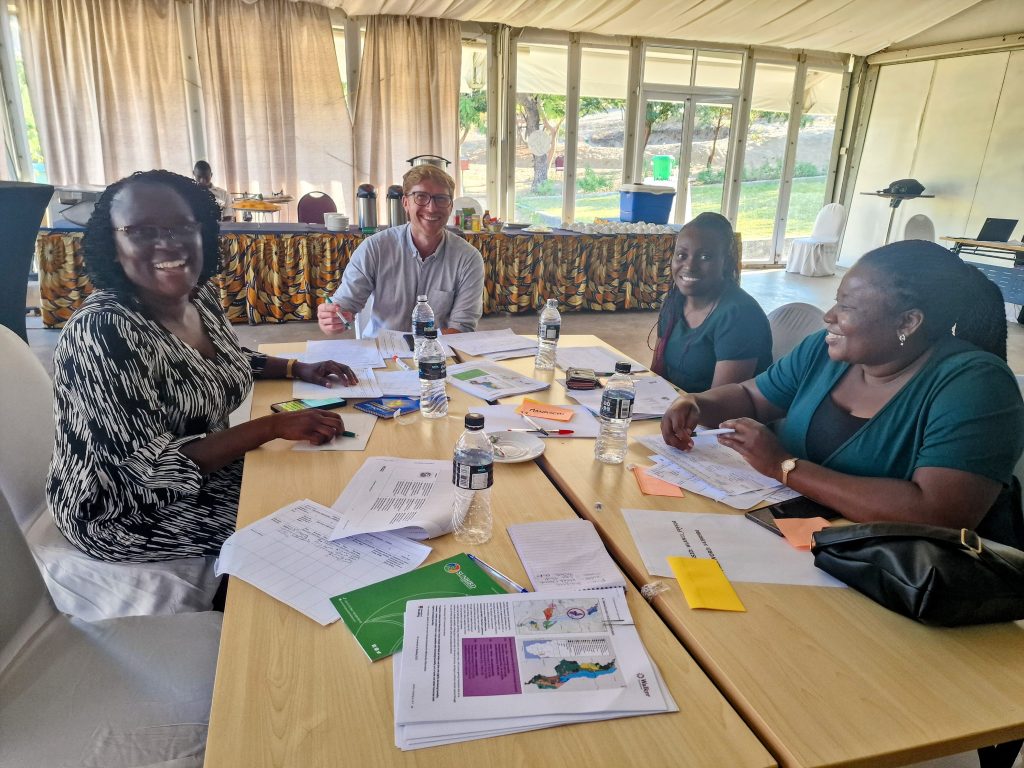
Working through district climate impact tables at the CHAIRR adaptation workshop, Salima, Malawi, June 2025.
Read WHO’s COP31 briefing
Read the CHAIRR-Malawi Summary for Policymakers
Written by Professor Rosalind Cornforth, Director of The Pearl, University of Reading, with thanks to Dr Celia Petty, Co-Director of The Pearl.