

9 March 2026; 13:00-14:00 GMT
Presenter: Temitope Odedeyi
Biography
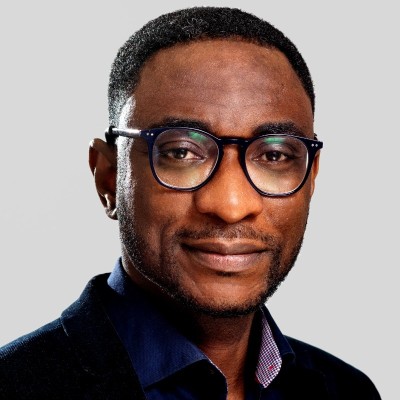 Dr Temitope Odedeyi is a Royal Academy of Engineering Research Fellow and Senior Research Fellow in Electronic and Electrical Engineering at University College London (UCL). His research sits at the intersection of digital technologies, climate-smart agriculture, and sustainable development, with a particular focus on the use of IoT sensing, remote sensing, and AI to optimise food production and resource use in agricultural systems. He leads and contributes to international projects across Africa, Europe, and the UK, working with farmers, researchers, and policymakers to translate data-driven insights into practical resilience and adaptation strategies.
Paper/article to be presented
Title: Growing Crops for a Changing Climate: Insights from Cassava Field Experiments
Authors:Temitope Odedeyi; Olalekan Kolawole; Chike Ugoji; Toye Ayankanmi; Oziegbe Okhuoya; Ismail Rabbi
LinkedIn: Temitope Odedeyi
Theme: “Growing Crops for a Changing Climate”
Dr Odedeyi has kindly shared the slides he used during the discussion: 26.03.09 – MCILRG_Growing Crops for a Changing Climate_Temitope Odedeyi
Session overview
The session was chaired by Lynn De Miranda and formed part of the Pearl’s monthly My Climate Risk Interdisciplinary Learning Group.
Dr Odedeyi drew on his research and outlined the experimental design and data-collection approaches, and discussed early results and emerging insights, with particular attention on a critical climate and food security issue: how to improve crop yields in a rapidly changing climate, where farmers can no longer rely on traditional weather patterns.
Highlights and key themes
We were delighted to welcome Dr Temitope Odedeyi from University College London for an engaging session exploring how digital technologies and climate‑smart agriculture can work together to support farmers facing an increasingly unpredictable climate. Growing up in cassava‑farming communities, he carried into the room both lived experience and a clear awareness of the gaps between technological ambition and everyday farming realities.
He framed his presentation around a straightforward but sobering challenge: how do we reliably feed nearly ten billion people in a climate system that is becoming more unpredictable by the year? Cassava became his lens for exploring this question, a crop that quietly sustains almost 800 million people, travels easily through drought conditions, and is increasingly valuable not just as food but as industrial starch. Yet for all its importance, cassava is still grown mostly by smallholders who lack access to the kinds of environmental data that could help them adapt.
Dr Odedeyi walked the audience through the system his team is building: a mix of soil and weather sensors, crop‑quality instruments, and experimental devices that measure the electrical properties of plant tissue to infer crop health and physiological status. These tools, he explained, allow researchers to capture the actual environmental conditions cassava experiences, rather than relying on broad regional averages that mask critical differences.
He then shared early results from multi‑year field trials run in partnership with the International Institute of Tropical Agriculture. The graphs he showed sparked immediate curiosity: the same cassava genotype behaved dramatically differently depending on region, season, and local environmental factors. A variety that thrived in one location in 2023 could perform poorly there the next year, only to excel somewhere entirely different. What might look chaotic at first glance is precisely the kind of complexity that technology‑supported monitoring can reveal and eventually help manage.
From there, Dr Odedeyi talked about the work ahead: combining ground‑sensor data with satellite imagery to create high‑resolution environmental insights at a cost smallholder farmers might actually afford. He shared a candid story about the team’s “low‑cost device” that still cost over £70, far too expensive for the farmers it was meant to serve. This illustrated the care that needs to be placed on designing technology that fits both the culture and the economics of the communities that will use it.
Questions from participants and Temitope’s replies
How does starch content fit into yield prediction and farmer decision‑making?
Dr Odedeyi explained industrial buyers typically pay farmers based on the starch content of cassava roots rather than weight alone, which makes starch measurement essential. His team developed a portable device that lets farmers assess starch levels before going to market. This helps farmers avoid costly surprises at the processing plant and choose the best-selling strategy, selling to either an industrial buyer or the local food market.
Are the yield differences across locations statistically significant, and what explains them?
Yes. The data show clear yield variation across locations, reflecting systematic environmental differences between sites. This variation arises from several interacting factors, including soil conditions, rainfall patterns, temperature cycles, and the timing of planting.. Farming practices are controlled in trials but will matter later when the system reaches real farms.
How was seasonality captured, given cassava’s long growing period?
Even though cassava matures over 9-12 months, the trials used staggered planting seasons, aligning with different rainfall cycles. This allowed the team to analyse how the timing of planting and harvesting influences both yield and starch accumulation.
Does leaving cassava in the ground longer affect starch content?
Yes. Dr Odedeyi described cassava as a “security crop” but noted that starch content peaks and then declines if the crop stays too long in the soil, especially after heavy rain. The team’s data is beginning to reveal more precise windows for optimal harvest.
Were there any surprising data insights?
He said the emerging patterns in gene & environment interactions were particularly striking. Variability in starch accumulation, senescence timing, and yield behaviour suggested mechanisms that traditional agricultural knowledge had hinted at but never quantified.
What is the biggest challenge in making this work meaningful for farmers?
Dr Odedeyi called it a “language barrier,” but not only in the literal sense. Engineers and farmers often think in different problem‑solving languages, leading to mismatched expectations. Cost and usability were recurring challenges. What engineers see as inexpensive can still be unattainable for farmers, and overly complex tools risk becoming irrelevant in the field.
How will improved genotypes eventually reach farmers?
Once a promising variety is identified, it moves through advanced yield trials across multiple regions. The goal is to match each genotype to the environments where it performs best before scaling up distribution to farmers.
The session closed with a strong sense of possibility: that by combining engineering, agronomy, and local knowledge, we can build agricultural systems that are both resilient and equitable in a changing climate.