

9 February 2026; 13:00-14:00 GMT
Presenter: Sally Bridgeland – Hon Group Captain Sally Bridgeland BSc ARCS FIA FRSA FSIP
Biography
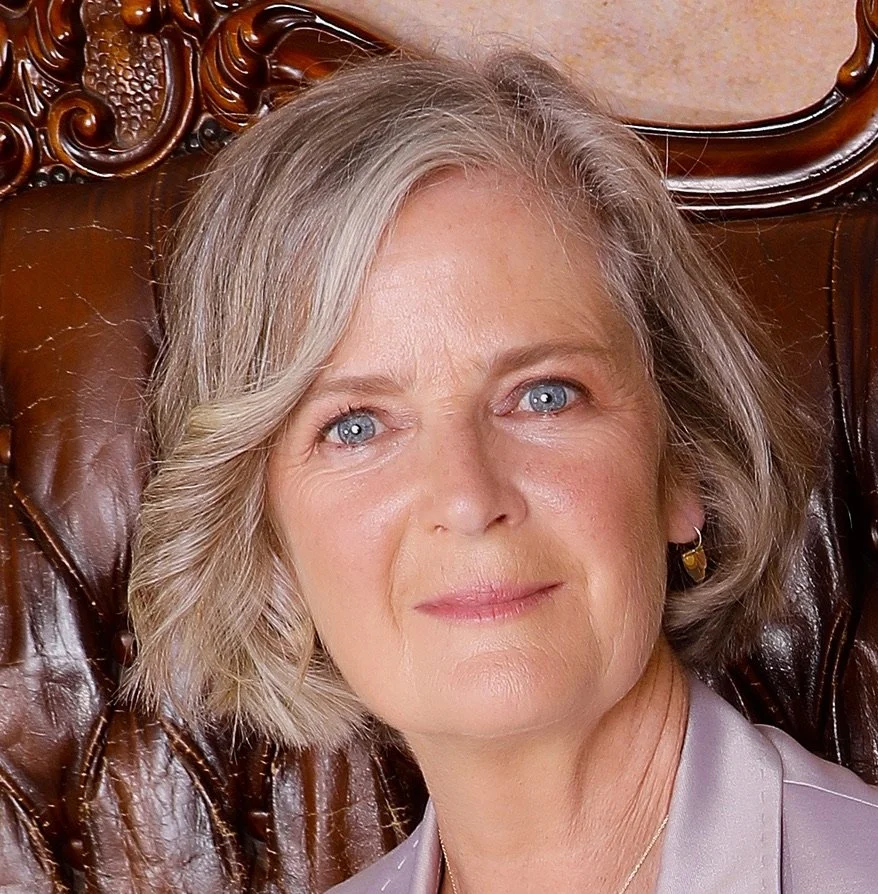 Sally is an actuary with extensive experience in innovation, risk management and responsible investment across investment management and pensions. She was CEO of the BP Pension Scheme in 2007-14 after twenty years with Aon Hewitt working as a consultant and in investment research. Sally’s non-executive portfolio currently includes Chair at Nest Invest, the Development Bank of Wales and at BelleVie Care and non-executive director at insurers Pension Insurance Corporation and Intact UK.
To be presented
Title: The Drama and Chess of Climate Change
Link to presentation: 26.02.09 – MCRILG -Sally Bridgeland
Link to Thematic Review Report: actuarial-involvement-in-climate-and-sustainability-work.pdf
Additional webpage: Sally Bridgeland

Session Highlights
The session was chaired by Heidi Llanwarne and formed part of the Pearl Academy’s monthly My Climate Risk Interdisciplinary Learning Group.
Hon Group Captain Sally Bridgeland BSc ARCS FIA FRSA FSIP drew on her background as an actuary, investor, and board chair to explore how different ways of thinking — analytical and imaginative — are both essential for understanding and managing climate risk. Her talk was grounded in practical experience across pensions, insurance, investment, and public institutions, and reflected the ideas developed in her forthcoming book Chess Club, Drama Club.
Highlights and key themes
Sally opened by inviting participants to practise what she called “acute listening”: listening without preparing a response while someone is still speaking. This, she suggested, is increasingly difficult in fast‑paced, online professional environments, yet essential if we are to grasp the full shape of complex problems like climate change. The structure of her talk deliberately asked participants to stay with the story before jumping into questions.
A central message was that climate risk cannot be understood through carbon metrics alone. While carbon accounting and net‑zero targets are important, they are not the full story, and in some cases can lead to the “right carbon answer but the wrong nature answer”. Sally argued for a broader framing of risk that incorporates ecological impacts, social systems, and unintended consequences along the transition pathway. Climate reporting, she suggested, risks becoming overly narrow if it focuses only on what is easiest to measure.
She introduced the metaphor of “chess club” and “drama club” as a deliberately playful way of describing two complementary modes of thinking. Chess club thinking is analytical, structured, and probability‑driven. It focuses on optimisation, avoiding downside risks, and working within defined rules. Drama club thinking, by contrast, is narrative, imaginative, and exploratory. It is about stories, scenarios, emotions, and asking “what if?”. Neither approach is sufficient on its own. Problems arise when organisations fall into one mode and stay there.
Drawing on actuarial practice, Sally described how modern risk modelling has moved from deterministic answers to distributions and ranges of outcomes. These models are useful, but they do not tell stories on their own. The assumptions, judgments, and data choices that sit behind them are inherently narrative, even if we pretend otherwise. This is where drama club thinking already enters analytical work — whether acknowledged or not.
She contrasted this with scenario analysis and reverse stress testing, which explicitly require imagination. Reverse stress testing, in particular, asks organisations to imagine failure first, and then work backwards to understand how it could come about. In climate terms, this means asking not only how temperature pathways might unfold, but what combinations of political, economic, operational, and reputational failures could push systems beyond recovery.
Sally linked this to the Three Horizons framework, suggesting that chess club thinking tends to dominate Horizon 2 — incremental change from the present — while drama club thinking is essential for Horizon 3, where radically different futures must be imagined. Using transport as an example, she distinguished between improving fuel efficiency (chess club) and reimagining mobility altogether (drama club). Effective climate strategy requires movement between these horizons, not fixation on one.
One of the most practical contributions of the session was Sally’s idea of a “club mix question”: pairing an expansive, imaginative question with a tighter analytical one. Drawing on Daniel Kahneman’s idea of pre‑mortems, she suggested asking first, “Why might this fail?” before asking, “What can we do now to reduce that risk?” This sequencing helps temper overconfidence and brings both creativity and discipline into decision‑making.
Throughout the discussion, Sally emphasised the importance of no‑regrets actions — decisions that leave organisations better off across a range of plausible futures. She illustrated this with examples from pension fund investing, where relying on a single high‑conviction transition pathway can be dangerous if it turns out to be wrong. Diversification, storytelling, and careful framing can help trustees and policymakers move forward despite uncertainty.
The emotional and cultural dimensions of risk also featured strongly. Sally reflected on how shifts in political tone, particularly in recent years, have altered the “emotional temperature” of climate discussions. Risk is shaped not only by data, but by trust, confidence, and whether institutions feel able to act. Insurance, she noted, plays a crucial role in enabling risk‑taking by providing that confidence — but only if risks remain insurable.
She closed by returning to the idea of playfulness. The chess club / drama club framing is intentionally simple, not because the issues are simple, but because simple language helps people notice when they are stuck in one way of thinking. Climate risk, she argued, is too complex to be managed without this kind of cognitive flexibility.
Questions from participants and Sally’s replies
Q: How have you seen analytical and narrative approaches combine to actually change organisational decisions? Where have you seen quantitative discipline and narrative imagination come together to change what organisations actually do, rather than just improving risk analysis?
R: Sally pointed to pension fund decision‑making that moves away from averages and towards scenario‑based thinking. By exploring multiple futures, trustees can identify “no‑regrets” actions that improve outcomes across scenarios. She emphasised that high‑conviction strategies can be dangerous if wrong, and that diversification often emerges as a better answer once stories and numbers are considered together. She also highlighted the power of framing — using stories and Venn diagrams to align different stakeholders around a course of action, including in politically sensitive contexts.
Q: How are insurers approaching risk in the context of climate change?
R: Sally explained that approaches vary by insurer. Property insurers increasingly model climate risks at very granular levels, which raises questions about the balance between precision and the core purpose of insurance as risk‑sharing. At a portfolio level, diversification remains key. She also highlighted the role of insurers’ investment portfolios, including investments in natural capital solutions such as flood mitigation, which reduce underlying risks rather than just pricing them. She noted that reinsurance markets are already reflecting climate change, with events becoming more frequent and costs rising globally.
Q: Are pension fund investors mainly managing climate risk passively, or actively trying to improve outcomes?
R: Sally said it is a mix. Some funds focus on compliance and disclosure — a more “tick‑box” approach — while others are actively investing in climate solutions. She gave the example of Pension Insurance Corporation, where a significant share of assets is invested in commercially viable projects that support a more sustainable economy, such as renewable energy and social infrastructure.
Q: If scenarios don’t have clear probabilities, how can they be used as metrics, triggers, or early warning indicators — especially for pricing and risk appetite?
R: Sally described how scenarios can still be useful by encouraging debate about plausibility rather than precision. She outlined practical techniques for reverse stress testing, including mapping pathways to failure and identifying early warning signs where intervention is still possible. Risk appetite, she argued, is best shaped around these transition points — especially the space between “amber” and “red”. For pricing, scenarios help test how wrong assumptions might be across portfolios, even if they don’t yield precise numbers.
Q: In central banking, should we use fan charts or scenarios to communicate uncertainty?
R: Sally argued that both are useful for different purposes. Fan charts can be misleading if people assume the answer must lie within them. Scenarios help illustrate how extreme outcomes could arise and support course correction. She warned against false precision and stressed that models can still be “wrong — just a different kind of wrong”.
Q: What does this mean for educating future climate leaders? Should students specialise deeply or learn both chess club and drama club thinking?
R: Sally suggested that education needs both. Specialist disciplines (chess club) are essential, but they must be connected by shared narratives (drama club). She argued that students need help bridging silos, relating their expertise to others’ work, and communicating evidence in accessible ways. This is particularly important for taking heat and ideology out of climate debates.
Q: Is there such a thing as “sustainable risk”? How do we reconcile financial risk management with escalating climate risks?
R: Sally emphasised scenario testing as a way to zoom out and question assumptions. She advocated spending more time asking where strategies could fail, rather than trying to prove they are right. This kind of vulnerability, she argued, is essential for navigating climate‑induced uncertainty.
Q: How do you maintain buy‑in for cooperative, game‑based approaches when evidence of success is slow?
R: Sally stressed the importance of understanding why people are at the table in the first place — their motivations, incentives, and personal purposes. Drawing on acting theory, she argued that effective collaboration depends on recognising these drivers. She highlighted two non‑egotistical purposes that help sustain engagement: wanting to understand and wanting to help. Informal, one‑to‑one conversations often matter as much as formal group processes in maintaining momentum.